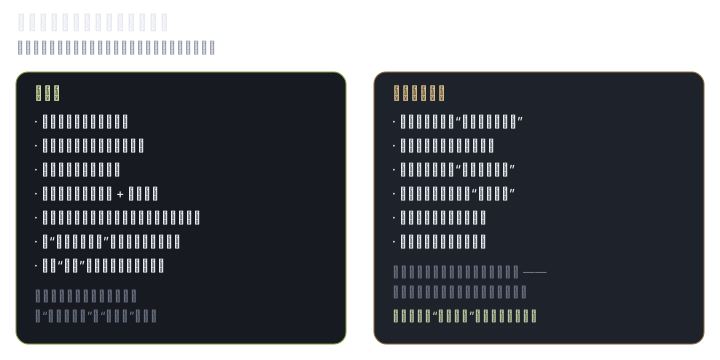
Ask “which pesticide and at what dilution” and we will not hand you a recipe; ask “is this downy mildew in the photo” and we will not decide for you. This is the list of things we do not do, and why those lines do not move.
1. When you ask which pesticide, this is what we say
Read the label first: the formulation decides how it is applied (spray or broadcast), the registered crop decides whether it may go on vegetables, and the pre-harvest interval decides when you can pick.
When to spray: in heat, before 10am or after 3pm; not in wind above force 3, not in rain.
Whether you need it at all: yellow sticky traps, insect netting, ventilation, clearing debris — if it can be avoided, avoid it.
We will not say: what dilution, what to mix it with, or how many days apart.
2. Four more things we will not do
The line is not about expertise; it is about whether a mistake can be undone.
You might ask
We will give
We will not give
“What disease is in this photo?”
Several possibilities, what to look at for each, how to self-check
“It is definitely downy mildew”
“How much will this yield?”
The variables that decide it, and the one you can still change
“About five kilos”
“Is this plant salvageable?”
What to try and how long until it shows
“It is gone, pull it out”
“Can I mix A with B?”
“Follow the label; if the label does not list it, do not mix”
A mixing ratio
3. Why these lines do not move
Because the costs of being wrong are asymmetric. Overwatering can be corrected; a wrong pesticide is crop injury and residue — leafy crops are harvested soon, so one mistake can make the whole batch inedible. And once a photo is declared “definitely this”, you will treat for it: a wrong call means a wasted spray and a lost week.
For dilution, mixing and dose, the label is the only basis with legal force. If we quote a number and it goes wrong, there is nothing to check it against.
A photo can show what something looks like, not what it is — light, angle, variety and deficiency can all imitate a lesion.
Yield depends on weather, soil and your management. Anyone who promises a number is inventing one.
4. We would rather seem unhelpful
“Follow the label concentration” sounds less cosy than “two capfuls per bucket”, but it is right. Our job is to hand you the basis for judgement so you get better at reading your own plot — not to make you dependent on a recipe.
5. One known awkwardness
If you postpone a task without saying until when, it disappears from the dashboard for now. We know that is awkward and intend to require a date. It is written here so you do not think you missed something.
6. If you also write code
The MCP side exposes six read-only tools: users, plantings, plan, nodes, changes, memory. Writes go through the same business logic the app uses; there is no second implementation.
The knowledge base is referenced read-only: no write access, no invention. When retrieval fails we say the material stops there.
Red lines live in the prompt, hard constraints in the validation layer: unknown environment may not be assumed, milestones are never rescheduled automatically, failure discards the whole proposal.